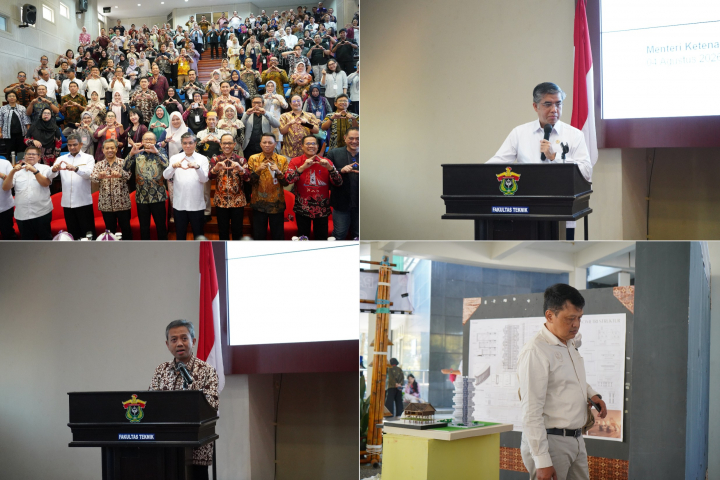
The 2026 APTARI National Conference at the Faculty of Engineering, University of Hasanuddin, Promotes the Transformation of Architectural Education to Meet the Challenges of the AI Era and the Green Economy
Makassar — The Faculty of Engineering at Hasanuddin University is hosting the 2026 National Working Meeting (RAKERNAS) of the Indonesian Association of Architecture Higher Education (APTARI), which will take place on August 4–5, 2026, at the CSA Building of the Faculty of Engineering at Hasanuddin University. Under the theme “Transforming Architectural Education to Foster Professional Architects with Character and a Commitment to Sustainability: From Local Wisdom to Future Technologies,” this national forum brought together various stakeholders in architectural education to discuss the future of the profession amid developments in artificial intelligence (AI), the green economy, changing industry needs, and the demands of sustainable development. The organizers of the Aptari National Conference at Hasanuddin University collaborated with the South Sulawesi Architecture Higher Education Forum, chaired by Dr. Ir. Ar. Edward Syarif, ST., MT., IAI.
Also in attendance were Assistant II for Economic Affairs and Development Andi Darmawan Bintang, M.Dev. P.I.G.; Chair of the APTARI National Executive Board Ar. Yulianto Purwono Prihatmaji, S.T., M.T., IPM., IAI., along with his team; and Dean of the Faculty of Engineering at Hasanuddin University, Prof. Dr. Eng. Ir. Muhammad Isran Ramli, S.T., M.T., IPM., AER., along with his team. The presence of representatives from the government, universities, professional organizations, and certification bodies demonstrates the breadth of the ecosystem involved in the development of architecture education and the architectural profession in Indonesia.
In addition, the Chair of the Indonesian Architects Council (DAI), Ar. Ahmad Saladin, IAI; the National Chair of the Indonesian Architects Association (IAI), Ar. Georgius Budi Yulianto, IAI., AA.; and the Chair of the Indonesian Architect Certification Body (LSP SARSI), Ar. Pierre Albyn Pongai, S.T., M.T., also attended the event.
AI Is Changing the Way We Work, Not Just Replacing Jobs
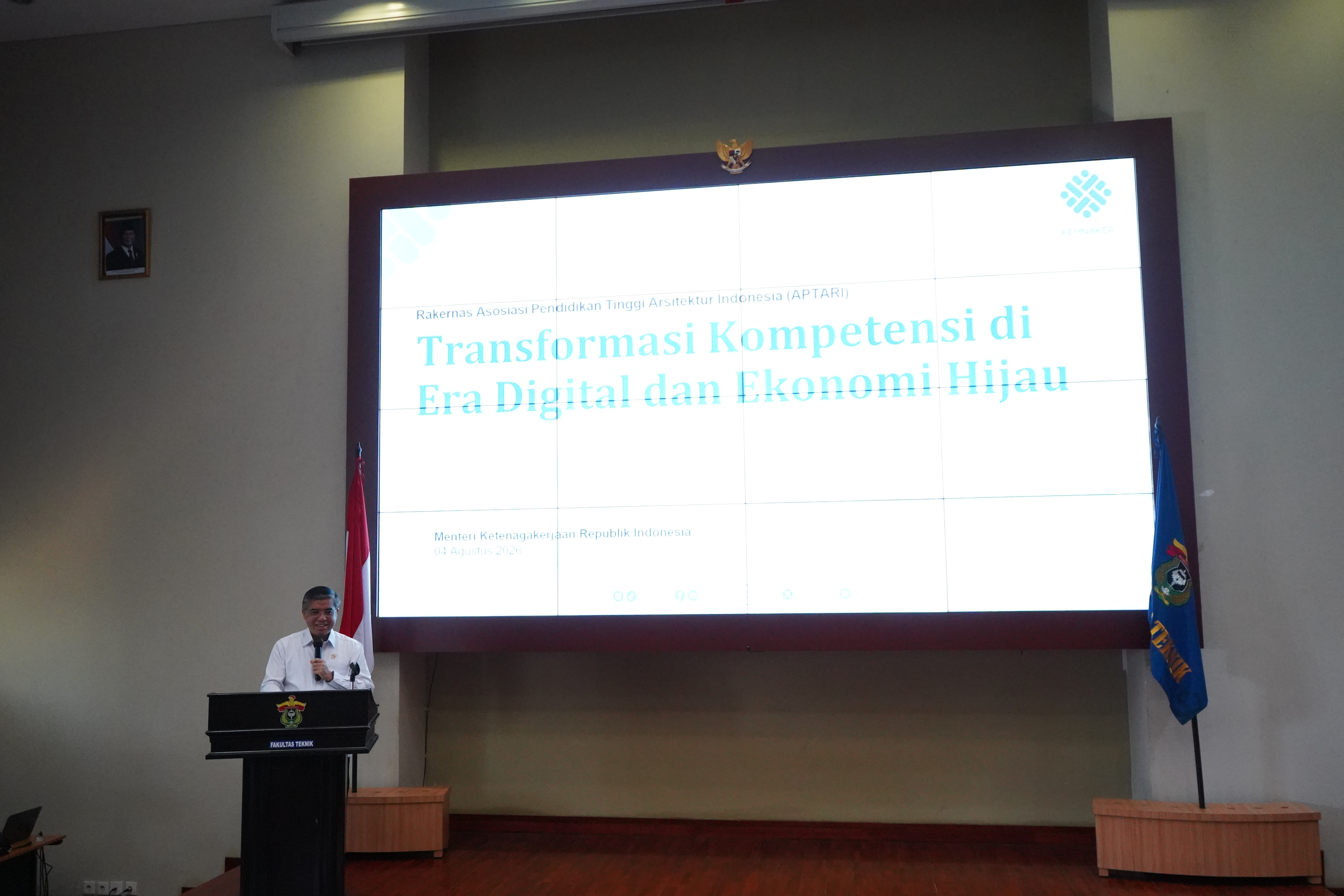
In his presentation, Prof. Yassierli explained that technology is increasingly transforming the way people work. These changes are driving a shift away from routine tasks—such as processing data, searching for information, compiling reports, and carrying out procedures—toward activities that require human capabilities to verify AI results, analyze information, make decisions, solve problems, innovate, and collaborate.This perspective is particularly relevant to architectural education. AI is increasingly being used in architectural work, especially for repetitive and non-complex tasks such as writing reports, creating preliminary design visualizations, and preparing bid documents. However, its use remains limited for complex and high-risk tasks, such as contract management, cost calculations, and project cost management. The adoption of AI in architectural firms is even projected to rise from 41 percent in 2024 to 59 percent in 2025.
This indicates that the challenge in architectural education is not merely teaching students to use technology, but building their ability to work with AI in a critical, creative, and responsible manner. Future architects need to possess both technical skills and the ability to interpret context, make decisions, communicate, and generate innovative solutions.
Addressing the Skills Mismatch Through Competency-Based Education
Consequently, the concept of a “skills-first” labor market has become a strategic priority. The workforce is increasingly prioritizing verifiable skills over mere academic degrees. This approach can be strengthened through modular learning, micro-credentials, recognition of prior learning and experience, and skills-based hiring.
For architecture education, these changes can be implemented through project-based learning, portfolio development, industry-responsive studios, competency certification, and collaboration with the professional community. Higher education institutions are required not only to ensure that students understand theory but also that they possess competencies that can be measured, demonstrated, and applied in a professional setting.
The Architecture of the Future Must Be Green and Human-Centered
The transformation of architectural education is also inextricably linked to the green economy agenda. The building and construction sector accounts for approximately 37 percent of global CO₂ emissions and consumes about 50 percent of global material extraction. These conditions make climate literacy a critical competency for architects to produce designs that support sustainability and net-zero whole-life carbon targets.At the same time, the development of AI actually reinforces the importance of human skills, such as judgment, critical thinking, empathy, creativity, relationship-building, and adaptability. The concept of “Triple Readiness”—which encompasses technical skill readiness, human skills readiness, and market entry readiness—serves as a framework for developing talent prepared to face changes in the world of work.
The National Conference Serves as a Forum for Collaboration in National Architecture Education
In addition to the keynote address, the 2026 APTARI National Conference featured forums discussing the role and collaboration of architects in development, the scientific logic behind architectural research, and the maritime traditions of the Bugis people in the spread of architecture. The forums were followed by working group discussions covering MBKM, the 5-year (4+1) architecture program, the 4+2 architecture program, vocational education, curriculum and studio work, as well as academic development and research.On the second day, the agenda continued with a presentation on LAMDEPILAR, the signing of an MoU between SARSI and PT, and a plenary session on the results of the APTARI working groups. This series of events demonstrated that the National Working Meeting (RAKERNAS) goes beyond mere discussion forums; it is designed to generate discussions and recommendations that can strengthen Indonesia’s architectural education ecosystem.
For the Faculty of Engineering at Hasanuddin University, hosting the 2026 APTARI National Working Meeting serves as a momentum to strengthen the campus’s position as a space for academic collaboration, innovation, and competency development. The gathering of government representatives, universities, professional organizations, certification bodies, and the workforce is expected to strengthen the connection between architectural education and technological advancements, industry needs, local wisdom, and the sustainable development agenda.
Through this forum, the transformation of architectural education is expected to produce architects who not only master technology but also possess critical thinking skills, the ability to innovate and collaborate, an understanding of local contexts, green competencies, and the readiness to face the dynamics of the future workforce. This vision aligns with the role of higher education institutions in ensuring graduates possess measurable competencies while building a strong bridge between academia and industry through curriculum collaboration and project-based learning.