Electricity Bill Enters a Critical Phase: Hasanuddin University Expert Presents Eight Strategic Solutions before Commission XII of the Indonesian House of Representatives
Makassar — The transformation of the energy sector is no longer solely about accelerating the development of renewable energy generation or reducing carbon emissions. Behind the global energy transition agenda lies a more fundamental challenge: how Indonesia can safeguard its energy sovereignty, strengthen the resilience of its electricity system, and provide investment certainty without compromising its constitutional mandate.
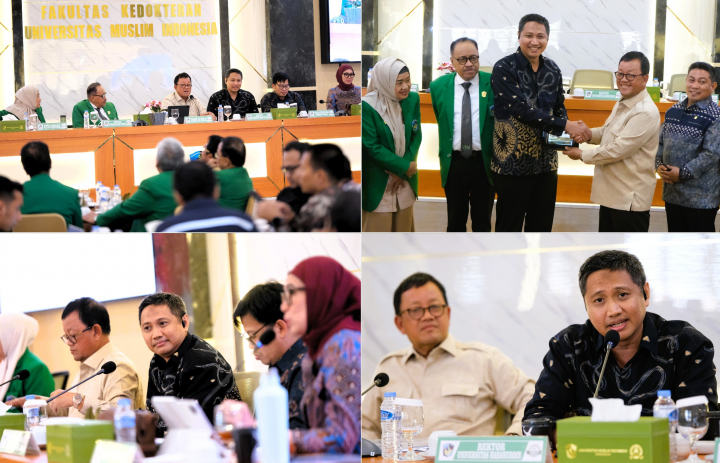
This issue was among the key focuses of the Legislative Working Visit of Commission XII of the House of Representatives of the Republic of Indonesia (DPR RI), which gathered input on the Draft Law on the Third Amendment to Law No. 30 of 2009 on Electricity. Held in Makassar on Wednesday, July 8, the strategic forum brought together the Commission XII delegation, led by Sugeng Suparwoto, M.T., the Ministry of Energy and Mineral Resources, PT PLN (Persero), local government representatives, higher education institutions, and energy experts to enrich the substance of legislation that will serve as a foundation for Indonesia's electricity sector development over the coming decades.
At the strategic forum, Hasanuddin University (UNHAS) was entrusted with presenting an academic perspective through Prof. Ir. Muhammad Bachtiar Nappu, S.T., M.T., M.Phil., Ph.D., Vice Dean for Partnerships, Research, Innovation, and Alumni Affairs at the Faculty of Engineering, Hasanuddin University. He delivered his perspective as a keynote speaker representing the academic community.
As a senior researcher specializing in the energy sector and electricity markets, Prof. Bachtiar has extensive experience in energy-sector policy development at both national and international levels. He previously served two terms as Head of the Energy and Electricity Research and Development Center at the UNHAS Institute for Research and Community Service (LPPM). He is also an alumnus of The University of Queensland, Australia, a member of the Group of Eight (Go8), a consortium of Australia's leading research-intensive universities. In addition, he has served as a Senior Consultant on various strategic energy programs supported by the Asian Development Bank (ADB), World Bank (WB), United States Agency for International Development (USAID), and Germany's Kreditanstalt für Wiederaufbau (KfW). This background has enabled him to bring together academic expertise, industry experience, and perspectives on global energy policy dynamics.
In his presentation, titled “Analysis of Eight Strategic Issues in the Electricity Bill,” Prof. Bachtiar emphasized that amending the Electricity Law represents an important opportunity to redesign the national electricity sector architecture so that it can better adapt to technological developments, the geopolitics of energy, and Indonesia's commitment to achieving Net Zero Emissions (NZE) by 2060.
However, he stressed that this transformation must not disregard the fundamental principles mandated by Article 33 of the 1945 Constitution of the Republic of Indonesia, which stipulates that electricity, as a branch of production vital to the livelihood of the people, must remain under state control for the greatest prosperity of the people.
“The success of the energy transition should not be measured solely by the amount of renewable energy capacity developed, but also by the state's ability to maintain system reliability, ensure equitable access to electricity, and safeguard sovereignty over national energy resources,” he stated.
From this perspective, Prof. Bachtiar outlined eight strategic issues that he believes require attention in refining the Draft Law. Among them are strengthening regulations governing the use of low-emission technologies such as Carbon Capture, Utilization and Storage (CCUS) to maintain the reliability of baseload power generation during the energy transition; reaffirming state control over primary energy resources, including renewable energy and biomass; and strengthening the concept of integrated electricity supply as affirmed in Constitutional Court Decision No. 39/PUU-XXI/2023.
He also highlighted the importance of establishing a stronger legal basis for ancillary services as supporting services for system reliability, particularly as the penetration of intermittent renewable energy generation continues to increase. Without a clear regulatory framework, he noted, renewable energy integration could instead create new challenges for the stability of the national electricity grid.
In addition, Prof. Bachtiar proposed improvements to the governance of Electricity Business Areas, stronger legal foundations for the development of electricity infrastructure by state-owned enterprises as National Strategic Projects (PSN), and regulations governing cross-border electricity trading through a Government-to-Government (G-to-G) mechanism, with state-owned enterprises serving as representatives of the state.
According to him, this approach is important to ensure that international electricity trading continues to provide optimal benefits for national energy security while strengthening Indonesia's position within the regional energy ecosystem.
One of the ideas that received particular attention during the forum concerned green attributes, or environmental attributes generated by renewable energy power plants. Drawing on best practices in countries with integrated electricity systems such as Malaysia and Thailand, he argued that these attributes should be inherently assigned to the party bearing the overall risk of electricity supply—the off-taker. Such an approach, he believes, could create greater legal certainty, improve market efficiency, and strengthen the competitiveness of Indonesia's electricity sector.
Furthermore, Prof. Bachtiar emphasized that the energy transition must be viewed as a national development strategy, rather than merely an environmental agenda.
“The strategic question is not only how we can generate cleaner electricity, but also who controls the energy resources, who benefits economically, and how the state continues to fulfill its constitutional mandate. The energy transition must strengthen national self-reliance rather than create opportunities for new forms of energy oligarchy.”
This perspective underscores that amendments to the Electricity Law concern far more than the technical aspects of electricity supply. They also involve resource governance, economic competitiveness, energy security, and Indonesia's position within the global energy landscape.
The active involvement of Hasanuddin University in this legislative process reflects the increasingly important role of higher education institutions as strategic partners of the state in developing evidence-based public policy. Amid the complexity of the global energy transformation, collaboration among academics, government, parliament, and industry is essential to producing regulations that are not only responsive to changing circumstances but also capable of safeguarding the national interest.
Through research-based insights and international experience, Hasanuddin University once again reaffirms its commitment to contributing solutions to the nation's strategic challenges. It is hoped that the amendment to the Electricity Law will provide a strong legal foundation for realizing an Indonesian electricity system that is reliable, competitive, sustainable, and firmly grounded in the constitutional mandate to promote the greatest prosperity of the people.